


Does Crop Thinning Really Lead to Better Wine?
Crop thinning—the practice of removing some grape clusters from the vine before harvest—is thought to boost the quality of the remaining crop, but how well does it actually work?
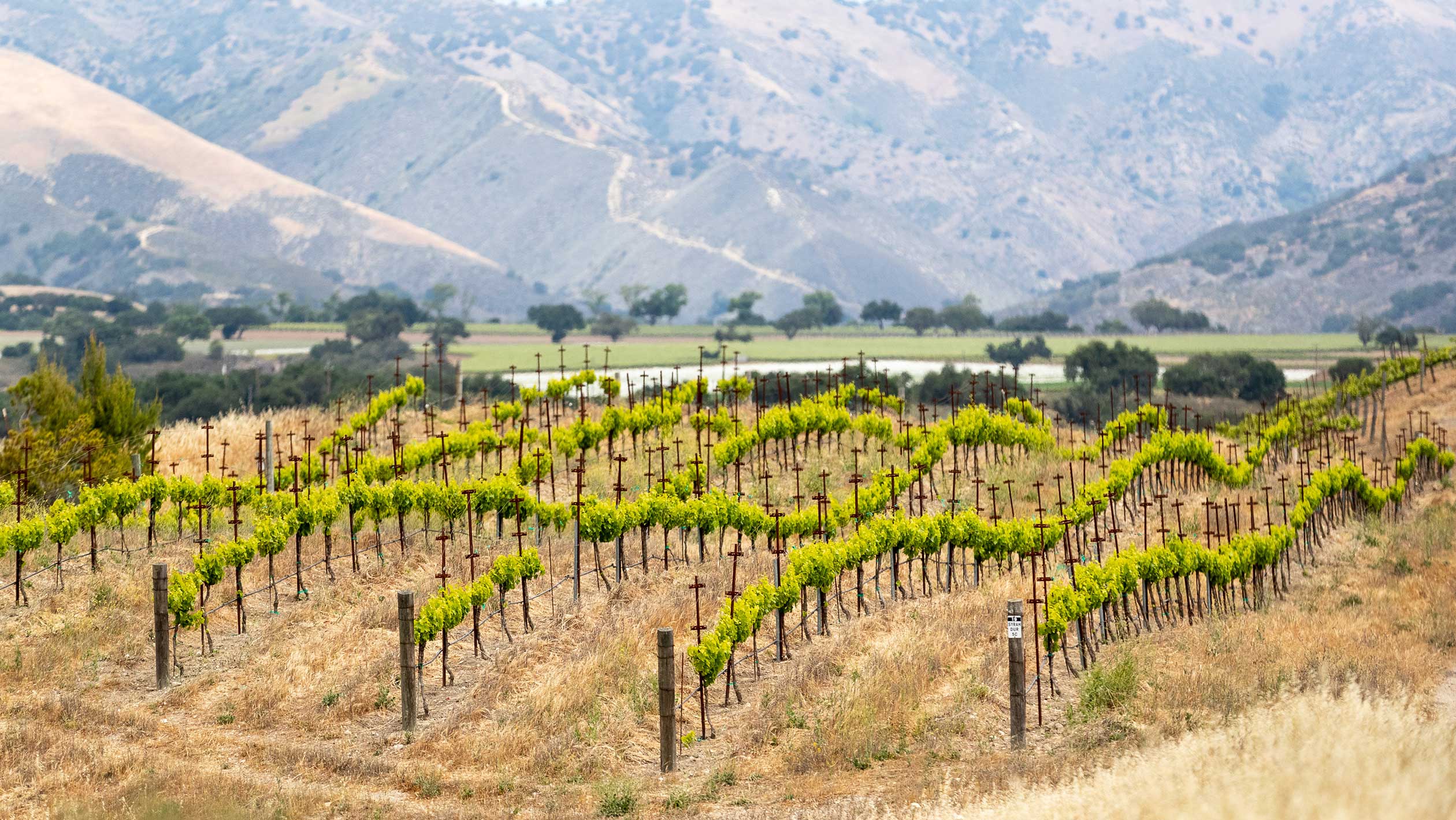
When Professor Patricia Skinkis, Ph.D, started as a viticultural extension specialist in the horticulture department at Oregon State University in 2007, she noticed that many Willamette Valley wine producers were convinced that farming grapes for low yields—which meant removing as much as 50 percent of their crop from the vine before harvest—ensured quality fruit and wine. This practice is known as crop thinning, cluster thinning, green harvesting, green thinning, dropping fruit, or a green drop.
“That’s bizarre,” thought Dr. Skinkis. “We have plenty of sunshine here. The vines are healthy and green. They’re not weak. The problem isn’t how much fruit is on the vines. It’s more how warm or cool the season is.”
In 2012, Skinkis and her colleagues launched a 10-year research project evaluating Pinot Noir grapes and wine grown in varying combinations of elevation, soil, and climate. “The overwhelming response was that it’s not necessary to thin as much as growers had thought, especially because the crop level is managed earlier in the season by cane pruning and shoot thinning [the removal of green material, like stems, leaves, tendrils, and bunches that later become fruit clusters],” says Skinkis. “So, it resonated for us to look deeply at what yield means, and to question, what does crop thinning really do for us?”
Don’t miss the latest drinks industry news and insights. Sign up for our award-winning newsletters and get insider intel, resources, and trends delivered to your inbox every week.→
Here, scientific research is coalesced with practical evidence and observation in pursuit of the same query—does crop thinning truly support the production of superior fruit and wines? And if so, when during a growing season is crop thinning most effective?
How Vines Respond to Crop Thinning
Brad Kurtz, the vineyard director at Gloria Ferrer in Carneros, California, describes grape clusters as “a sink for nutrients, sugars, and other organic compounds that the vine photosynthesizes in its foliage and absorbs through its roots.” Especially in younger vines, the plant’s energy is dedicated not only to ripening grape clusters, however, but also to establishing a root system and generating buds and shoots for the next growing season.
Younger or weaker plants “divvy up their bank of water, carbohydrates, and nutrients to help grow the canopy and roots,” says Skinkis. Thinning a portion of their clusters earlier in the season, prior to veraison, allows the plant’s resources to be utilized equitably to ripen the remaining clusters with sugars and acids in balance, and supports root development, the growth of permanent wood, and the following season’s buds.
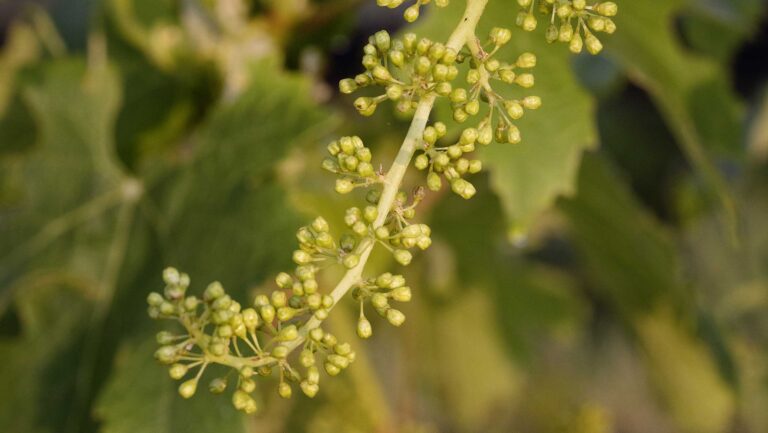
A 2024 study led by Joshua Vander Weide, Ph.D, an assistant professor at Michigan State University, and published in the Australian Journal of Grape and Wine Research, describes cluster thinning as a means of “achieving an optimal balance between vegetative and reproductive growth.” Vegetative growth refers to the plant’s green material, while reproductive growth describes the plant’s flowers, which become eventual grape berries. In many studies, this balance is described as the leaf-area-to-yield ratio.
In Sicily’s Etna DOC, Idda winemaker Antonio La Fata describes this as the need to achieve “equilibrium” between the vigorous leaf canopy and newer Carricante vines—trimming a few clusters before veraison strikes a balance. Further research, such as this study in the American Journal of Enology and Viticulture, reiterates the idea that optimizing this ratio produces high-quality fruit, as measured by berry weight, berry color, and sugar level.
How Much to Thin?
The driving question in Dr. Vander Weide’s study was whether the timing or severity (the amount thinned) of crop thinning led to “a distinct influence on vine production and fruit composition, particularly total soluble solids.” Total soluble solids (TSS) largely refers to sugars, or brix, in ripening grape berries, along with acids and other organic compounds. Other factors measured were titratable (or discernible) acidity, berry weight, pH, the leaf-area-to-yield ratio, and the presence of anthocyanins.
In addition to determining that moderate severity (36 to 55 percent thinned), rather than timing, modestly increased TSS and pH in particular, the study found that crop thinning led to noteworthy reductions in yield. However, it did not have a great influence on berry weight or fruit composition, which includes titratable acidity, total phenolics, and total anthocyanins.
The severity of crop thinning was also closely tied to pH. “Anytime you overcrop, the pH goes up [so, wines lose acidity], the brix don’t accumulate as quickly, and you don’t achieve the same phenolic load,” says Maya Hood White, the viticulturist and winemaker for Early Mountain Vineyards in Madison, Virginia. “The vine struggles to fully ripen that fruit in the same way it would with a more modest crop.”
Different Varieties Have Different Demands
Different cultivars respond to cluster thinning with different results. For example, a 2023 study showed thinning Syrah grapes pre-veraison enhanced berry weight, volume, and size in terms of length and width. Additionally, levels of “total phenolic compounds, total anthocyanins, and antioxidant capacity increased by nine percent, 27 percent, and 30 percent, respectively, compared to the control group without cluster thinning.”
Kurtz observes that, “Certain varieties will naturally produce more fruit than others and may benefit more from fruit thinning.” Hood White expands on this: “Petit Verdot will present four clusters per shoot, and Tannat will easily present three giant clusters. Merlot has lateral clusters that ripen differently than the main clusters, so some people will de-wing Merlot.”
James Mantone, the cofounder and vigneron at Syncline Winery in Washington’s Columbia Gorge AVA, observes that Mondeuse, which is native to the Savoie region in southeast France, is a “big cluster variety.” he says. “If we didn’t thin it, we’d probably hang 10 tons. Gamay will set four clusters on a shoot, and the same with Syrah, though different clones are very different.”
Vander Weide’s study concluded that the “use of this practice may only benefit wine grape producers in limited circumstances,” such as within cultivars that are particularly responsive to this treatment. This complements findings in Skinkis’ long-term study, which established that Willamette Valley growers cultivating Pinot Noir could achieve higher yields without compromising quality. It’s also why Kurtz cautions, “It’s important to note that not all vineyards or desired wine styles benefit from fruit thinning.”
The Importance of Timing
In a blog post for the National Cooperative Extension, part of the USDA’s National Institute for Food and Agriculture, Skinkis and other scholars discussed why the timing of crop thinning during the growing season can make a considerable difference in its effectiveness. If the crop is thinned too early in the season, robust berry growth might follow in the weeks right after fruit set, which can lead to diminished acidity and complexity in subsequent wines. For mature vines, thinning early in the season might also prompt vines to panic and push out secondary fruit clusters.
Three-quarters of the way through veraison, many viticulturists remove what’s lagging in ripening to ensure the ripest, most phenolically balanced grapes are brought to the winery. “It’s not so early that the vine reacts by pushing out more vegetative growth, and not so late that we don’t have the opportunity to further accumulate sugar and phenolics,” explains Hood White.
Similar to Skinkis and colleagues’ findings at the National Cooperative Extension, Kurtz perceives thinning to be most effective from the time the bunch is beginning or close to veraison. And, while older vines often won’t require thinning, “younger vines on fertile sites may benefit greatly from it,” says Kurtz. Hood White adds that in younger sites, the balance of “site and vintage dynamics, vine age, rainfall, water retention, and other variables” can all play a role in the advantageousness or necessity of cluster thinning.
Arguments Against Crop Thinning
Skinkis advises grape growers to simply set aside the belief that, in all cases, low yields equals higher quality, and to instead consider the particulars of their growing site to determine their target yield. This might mean accounting for vine age and site and climatic variables, and practically asking, “How much space do you have, in linear feet, and how many shoots and clusters can be accommodated per linear foot?” says Skinkis. “So often our industry speaks in terms of tons-per-acre or hectare, but what’s on that land can vary significantly. So, our recommendations for Pinot Noir, for example, in terms of how much is needed for yield per linear foot, won’t be the same for every cultivar across the world.”
A 2025 study conducted at Texas A&M University’s Department of Horticultural Sciences, similarly resolves, “While CT [cluster thinning] can be a valuable tool for enhancing wine quality, its implementation must be carefully considered in the context of specific vineyard conditions and economic constraints.”
In central Sicily’s Agrigento province, sprawling wheat fields and wild barley, chickpea, and lentil crops surround and protect the vineyards at Feudo Montoni in Cammarata, Italy, where organically farmed vineyards predate the European phylloxera epidemic. Fabio Sireci, the third-generation owner, observes, “If you must cut clusters, you’re too late. Winter pruning must set up the vine to create balance and the quantity you want by harvest.” Winter pruningleaves a select number of buds per plant, setting the foundation for how many grape clusters will be on those vines. This preparation is effective especially in older vines, where, explains Hood White, “You know how your site’s going to react over time.”
In the southern Rhône’s Costières de Nîmes AOC, Chloé Simonou, the enologist for Château d’Or et de Gueules, also resists trimming clusters. “This manipulation can be used when the yield is too high in relation to the appellation’s specifications, or if the plant-to-surface area of the vineyard is not sufficient to bring all the bunches in the vineyard to maturity,” she says. “Today, the trend is toward juicy, gourmet wines, so cutting bunches is not fashionable unless the yields don’t allow grapes to reach their full maturity.” Loïc Mahé, a vigneron and the current president of the Savennières AOC, crop-thins only in the rare cases when “the vines are too heavy, despite winter pruning already carried out to limit yield.”
Ryan Roark has been the director of viticulture and winemaking at Demetria Estate, a 45-acre biodynamically farmed vineyard in Santa Barbara County, California, since 2019. Roark worries about the impact of crop thinning. “Trimming clusters, to me, takes the plant further from its natural state,” he says. “And we want the estate to speak in its own language and have a unique expression and honest voice.”
Roark and Skinkis also raise economic concerns. Estate vineyards that don’t rely on selling fruit might readily adapt to higher yields “because they aren’t at the mercy of their buyer,” says Skinkis. In other cases, contract growers might feel forced to farm for low yields at greater expense. Skinkis has seen growers move to an acreage contract instead of a tonnage contract, and seek out clients who are less fixed on low tonnage.
“It’s complex,” says Skinkis. “You don’t make a lot of money growing grapes, but it’s cheaper to change pruning or thinning practices based on vineyard design, rather than to plant new vineyards and drop half of the crop. So, knowing your site really is important,” says Skinkis.