


Is Phylloxera Still a Threat to the Global Wine Industry?
Genetic adaptation, leaf-feeding populations, and global movement are reshaping the modern phylloxera threat
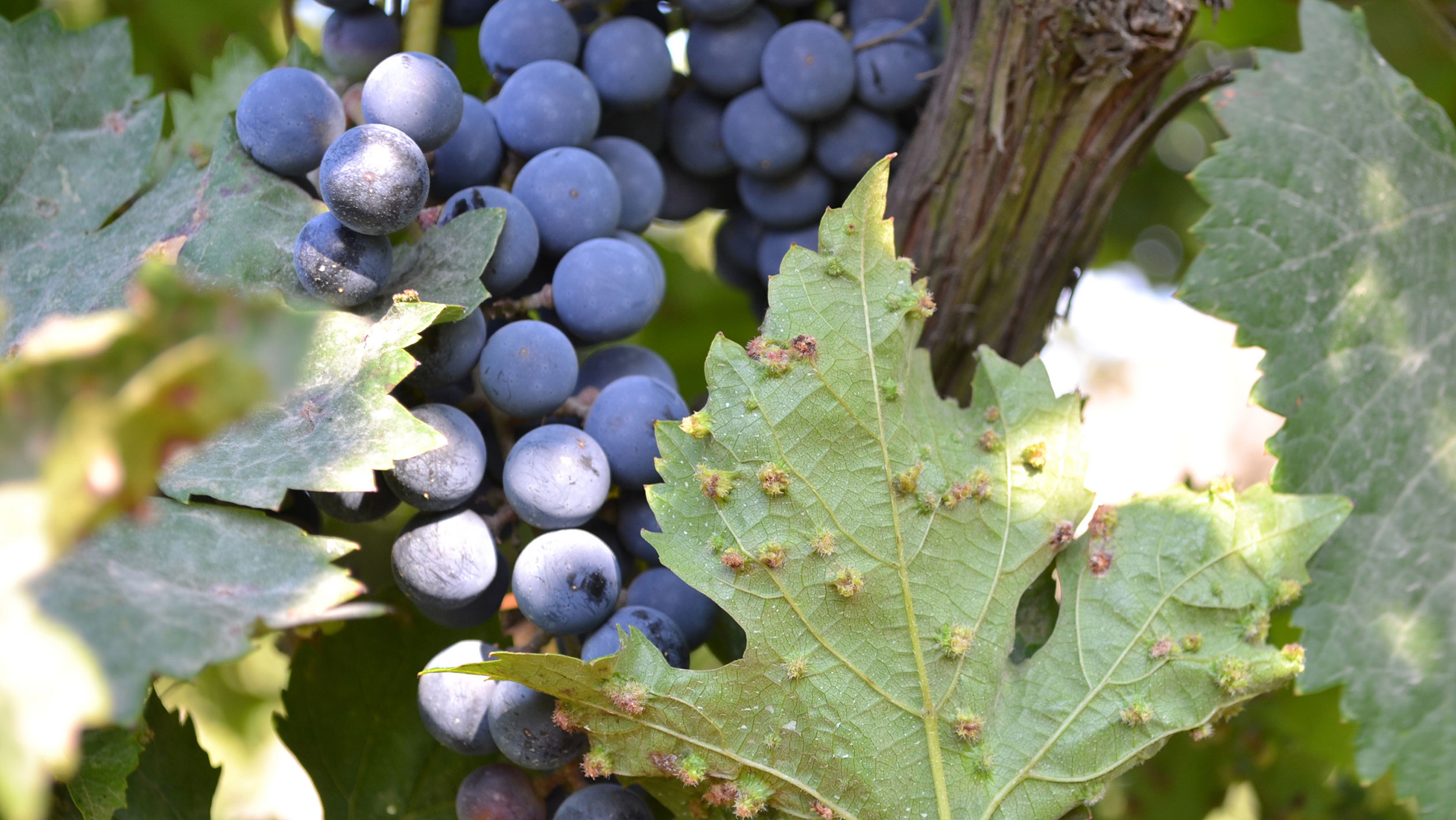
Phylloxera (Daktulosphaira vitifoliae) is a tiny aphid-like insect native to North America that attacks grapevine roots. North American grapevine species have long coexisted with the insect, but when phylloxera reached Europe in the mid-19th century, local Vitis vinifera plants proved highly vulnerable. The pest nearly wiped out the entire European wine industry, and only decades after the first recorded outbreaks did recovery begin through the practice of grafting European vines onto resistant American rootstocks.
The first successful experiments are generally credited to French growers Léo Laliman and Gaston Bazille, who in the early 1870s began trialing grafting in the Languedoc. The practice initially faced resistance from purists, who feared American rootstocks would compromise a wine’s flavor. Yet the undeniable success of these early trials eventually led the French—and other governments—to officially endorse the method, fuelling its spread across Europe and, ultimately, the rest of the world.
Grafting has since remained the most effective means of managing phylloxera, and today the pest is often described as a threat of the past. But recent detections and new research suggest that way of thinking is far from the truth.
The Modern Face of an Old Threat
In Australia, for example, where strict quarantine measures have limited infestations partially or wholly to around five percent of the country’s vineyard area, the threat still persists. The quarantine measures are enforced using a well-defined zoning system: the Phylloxera Infested Zone (PIZ), where the pest is known to be present; the Phylloxera Exclusion Zone (PEZ), where it is confirmed absent; and the Phylloxera Risk Zone (PRZ), an intermediary area where surveillance is incomplete or the pest’s presence is unknown. Despite these scrupulous measures, phylloxera was discovered at Maroondah in the Yarra Valley in 2006, and subsequent detections led authorities to extend the PIZ to its current boundaries in 2023.
Further detections in regions that were historically unaffected have shown that phylloxera remains a genuine existential risk to the global wine industry. In 2019, the pest was identified in Washington State’s Walla Walla region. There, vines were not grafted as the sandy soils were thought to provide a sufficient barrier to its spread.
“The detection prompted a deeper investigation,” says Michelle Moyer, Ph.D., a professor and viticulture extension specialist at Washington State University. “We discovered that phylloxera was established in most major grape-growing areas of eastern Washington.” Dr. Moyer explains that the severity of infestations varies significantly by site: older blocks tended to be more resilient, while younger plantings showed higher rates of decline.
In 2025, phylloxera was also detected for the first time in Tenerife, the largest of Spain’s Canary Islands. Like Washington State, this region off the coast of Morocco was also considered safe from the pest because of its relative isolation, and the vines were ungrafted as a result.
Pablo Prieto is the winemaker at Viña Carmen in Chile, a country that boasts no official reports of phylloxera detections in the past decade, according to the Servicio Agrícola y Ganadero (SAG). He points out that despite all the preventive measures in place worldwide, the risk remains high since phylloxera can still spread through multiple pathways. “Nurseries are a major risk factor globally, because propagation material can spread pests and diseases,” Prieto says. “[So] they require close monitoring. But the international movement of people, plants, and machinery always represents a risk.”
The Growing Threat of Leaf-Feeding Phylloxera
One of the most pressing concerns is the increasing spread of leaf-feeding populations of phylloxera, particularly in Europe, but also in China, Japan, eastern U.S., and parts of South America. Astrid Forneck, Ph.D., an Austrian researcher specializing in the pest, explains that the two known biotypes—root-feeding and leaf-feeding—are genetically similar; they simply target different vine tissues. While it was once commonly believed that Vitis vinifera was resistant to leaf-infesting populations, Dr. Forneck notes in recent years they have been observed in multiple vineyards across Austria, Germany, and northern Italy. To date, the reasons for their spread remain unclear. “I think it really depends on a combination of factors,” she says. “There must be a reason why this didn’t happen before. This year it was really, really bad. Some years you don’t see them at all.”
According to Moyer, climate change may be influencing the timing and population dynamics of leaf-feeding phylloxera, with warmer temperatures driving earlier wandering behavior. At the same time, there is a growing belief that the global trend toward reduced pesticide use—aimed at creating a more sustainable wine industry—may have the unintended consequence of allowing higher survival rates for this pest. In fact, it is suspected that the gradual shift away from using undervine herbicides, in favor of environmentally friendly practices like mowing or cultivating, may have contributed to the spread of phylloxera in Washington State.
“We might have been moving a lot more phylloxera around with these cultural changes,” says Moyer. “Of course, we don’t advocate returning to chemical weed management once a grower has transitioned away from it, but it does mean that managing both phylloxerated and healthy blocks requires careful planning of management rotations to avoid further spread.”
Increased mechanization in vineyards may also be partly to blame, as machinery can inadvertently transfer leaf-feeding populations from affected fields into the soil of pest-free areas. “When leaf-feeding insects don’t find any leaves, they go directly to the roots, where they hibernate, ready to emerge the following season,” says Forneck. “There’s so much that could be achieved simply by recognizing them in the vineyard, but since many growers can’t even identify them, it’s a very difficult pest to manage. There’s still a lot of research that needs to be done.”

If a Time-Tested Solution Falls Short
Resistant or alternative rootstocks are still a solution. Yet in regions where ungrafted vines are the norm, introducing American rootstocks could result in a significant loss of a unique selling point, potentially undermining their ability to succeed in an already highly competitive global wine market.
In a paper published in the Asia Pacific Journal of Anthropology, anthropologist William Skinner notes that the absence of phylloxera can carry profound symbolic significance, shaping the very regional identity of a place. “The phylloxera risk has economic, social, and symbolic dimensions in McLaren Vale,” he writes, “where the insect has become symbolically aligned with the most impersonal, pervasive, and destructive aspects of globalized wine capitalism.”
The pest’s evolving resistance to North American rootstocks only compounds the risk of its further spread. Vinehealth Australia technical manager Warren Birchmore highlights that rootstocks once considered secure, such as AxR1, have already failed in the past. With new phylloxera strains continually being discovered—166 in Australia alone, Birchmore notes—rootstocks will need to be continually developed to maintain effective resistance.
Relying heavily on the common belief that resistant rootstocks have resolved the phylloxera crisis, the wine industry may be overly complacent. The pest still lurks abundantly beneath the soil and, increasingly, it is boldly revealing itself in the sunlight, munching on vine leaves.
Dr. Jacopo Mazzeo is a U.K.-based freelance drinks journalist, consultant, and photographer. He contributes to leading trade and consumer publications including Decanter, Wine Enthusiast, Whisky Magazine, and Good Beer Hunting. Jacopo consults on consumer trends and marketing strategies, is a former sommelier, and judges international wine, beer, and spirits competitions. Before he embraced full-time journalism, he studied musicology at the University of Bologna and took a PhD at the University of Southampton. Follow Jacopo on Instagram @jacopomazzeophoto