


A Once-Obscure Puglia Grape Gets the Glow-Up It Deserves
BY DEVIN PARR5 MIN READ. THE WINE ENTHUSIAST
Susumaniello is one of those indigenous grape varieties that seemed destined to stay in the shadows. Until relatively recently, very few people outside of Puglia could identify it, let alone pronounce it. Even within the heel of Italy’s boot, it spent most of its life as a blending grape, while others like Primitivo and Negroamaro defined the region’s wine identity.
But this melodic-sounding variety—nicknamed “the little donkey” for its ability to carry heavy yields—has begun a steady glow-up, increasingly appearing on wine lists and among the recommendations of sommeliers and wine directors. Scott Ades, president of Dalla Terra, a direct importer of Italian wines and spirits, notes that “over the last five-plus years, it has been one of our highest growth wines.”
A Northern Salento Native That Almost Disappeared
Susumaniello hails from the Brindisi area of northern Salento, where sandy soils and coastal breezes help preserve acidity and temper the region’s heat. Tenuta Rubino, an estate closely associated with the grape’s revival, emphasizes the importance of this terroir. “This variety is deeply tied to its birthplace,” says Romina Leopardi, director of marketing and communications for Tenuta Rubino. “Its truest identity emerges only in Puglia, where the climate, soils, and traditions come together to shape its unique character.”
As Puglia became a source of bulk wine in the mid-20th century, growers favored high-yielding varieties. “Susumaniello was at risk of extinction because, after about 15 years, its yield declines,” explains Leopardi.
For producers who invested in it early, like Varvaglione—a multi-generational winery in Taranto—Susumaniello gradually revealed a more distinctive identity. “It has the potential to become a symbol for the whole region,” says Marizia Varvaglione, fourth-generation leadership at Varvaglione.
But Susumaniello didn’t come into its own until the late 1990s and early 2000s, when a wave of small-scale trials with the grape displayed something extraordinary. “Through our first micro-vinification experiments, we discovered an unexpected elegance and complexity in its expression,” says Leopardi. Those early tests reframed Susumaniello as a varietal wine with its own identity.
Masseria Li Veli, whose Askos project focuses on preserving indigenous varieties, reached similar conclusions. “What persuaded us to invest in this grape was its singular personality, so different from other native varieties,” says Alessandro Falvo, one of the owners of the Masseria Li Veli estate. “At the same time, it remains profoundly tied to its place of origin.” Their Askos Susumaniello has become one of the estate’s flagship wines, with accolades including a Top 100 Wines ranking and Tre Bicchieri from Italian food and wine magazine Gambero Rosso.
Susumaniello’s Broad Appeal
Susumaniello never quite fit in with Southern Italy’s more broad-shouldered wines. In another era, this made it an outcast. Today, it’s why people are paying attention.
“The first time I had it, I assumed it would be this massive, fruit-forward, jammy spectacle of a wine,” says New York City-based wine director Torrey Grant. “Yet it was elegant and lighter, belying a lower abv.”
Indeed, Susumaniello’s inky color contradicts its fresh, agile palate. “If [one] were to venture a comparison, Susumaniello could be considered somewhat akin to a Pinot Noir,” says Falvo, pointing to its “notes of red fruit, sweet spices, and aromatic herbs, with occasional hints of leather and tobacco.”
As Ades puts it, the variety “mixes qualities of Cabernet Sauvignon and Merlot—both crowd pleasers—with the freshness of Italian acidity.” The grape also takes well to rosé, offering depth without heaviness. “The rosé is very intense and elegant, perfect for pairing with food,” says Varvaglione.
Chicago wine director Torrence O’Haire puts it in the same lane as Gamay, Cinsault, and Grenache. “Susumaniello is the perfect balance between interesting and easygoing,” he says.
The Wine World Finally Catches On
The rise of Susumaniello may be a case of right-place, right-time serendipity thanks to a convergence of trends that have less to do with Puglia and more to do with how the global wine conversation has shifted.
Importers note a growing appetite for red wines that offer flavor without fatigue. “The wine started as a restaurant wine, but now its sales are 50% off-premise and growing more quickly there,” he says. “This shows there is growing consumer awareness and interest.” Ades also notes Dalla Terra recently placed the Askos Susumaniello at the American Airlines Admirals Club in Miami—an unexpected landing spot for a once-obscure Italian variety.
O’Haire sees similar momentum in restaurants. “The modern palate appreciates balance,” he says. “People don’t enjoy a culinary sledgehammer as much as the 1980s and ‘90s tried to convince us to love.”
The grape’s naturally lower alcohol and suitability for a cooler service temperature place it firmly within several fast-growing categories, from chillable reds to structured rosés.
At the same time, producers emphasize another factor behind the grape’s momentum: resilience. As regions around the world grapple with warmer seasons and irregular ripening, Falvo notes native varieties like Susumaniello are “naturally adapted to warm conditions and less vulnerable to climate change,” an increasingly important consideration for growers thinking long-term.
The broader enthusiasm for wines that feel rooted in place, not shaped for the international market, has also helped. “Susumaniello has persisted as an extremely localized grape, vinified by only a handful of producers, which contributes to its rarity and unique identity,” he adds.
Taken together, these forces have created the perfect runway. Susumaniello hasn’t become popular because it reinvented itself; it became popular because the wine world finally caught up to what it naturally does best.
Wine Enthusiast recommends:
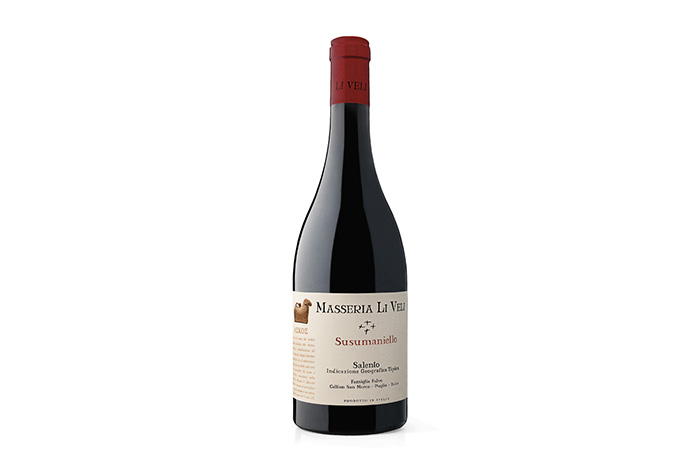
Masseria li 2023 ASKOS Susumaniello (Salento)
The nose is super savory, with aromas of dried herbs, preserved lemons and crushed rocks, while the slick palate balances with plenty of fruit, with wild strawberry and cherry popping over a backbone of stone fruit and citrus. 90 points — Danielle Callegari
$22 Station Plaza Wine and Spirits
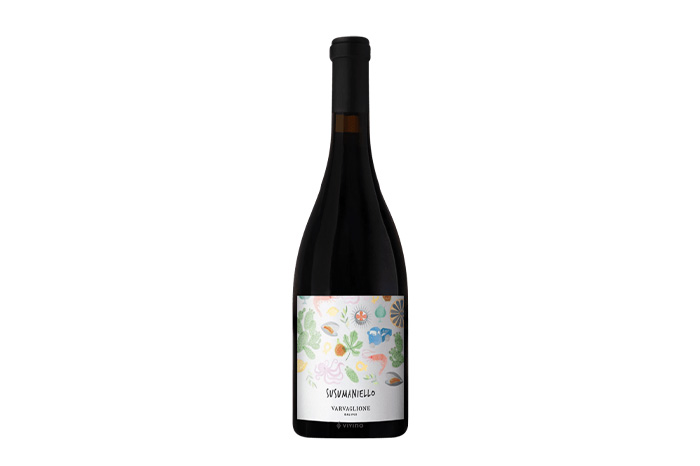
Varvaglione Vigne & Vini 2021 Susumaniello (Salento)
The nose is full of deeply savory aromas, from tar and cured meat to thyme and balsamic, with an undertone of tart blackberries. The palate brings sweeter blackberries, bolstered by a drizzle of black cherry, along with more earth and herbs rolling into a cocoa-powder finish. Full and rich, but also with defined edges—an excellent introduction to Susumaniello. 92 points— D.C.

pajaru 2024 LAMPU Susumaniello (Puglia)
The nose kicks things off with sweet tobacco leaves in a cedar box, plus aromas of dried cranberries and dried cherries. The simultaneously sweet, savory and tangy palate mimics the nose, but also features a sunny slice of orange and a peppery warmth on the finish. 90 points — D.C.