


Grapes Series: The great potential of Branco Lexítimo
An almost abandoned indigenous variety, that has the potential to give life to incredible terroir-driven wines.
janvier 8, 2026. Miguel Crunia. https://galiciansommelier.substack.com/p/grapes-series-the-great-potential?utm_source=post-email-title&publication_id=7194804&post_id=182655581&utm_campaign=email-post-title&isFreemail=true&r=2fjbe0&triedRedirect=true&utm_medium=email
I once heard that terroir is not a privilege or a gift from nature, but a natural handicap that a given variety has overcome. The clearest example of this occurs when observing how a variety behaves in a fertile area versus how it performs right at the edge of the limits of vine cultivation.
In Northwest Spain, heading from the vertiginous mountain slopes of Asturias all the way to the Ocean-battered cliffs of the Costa da Morte in Galicia, we find a variety that has adapted to extreme conditions: Branco Lexítimo.
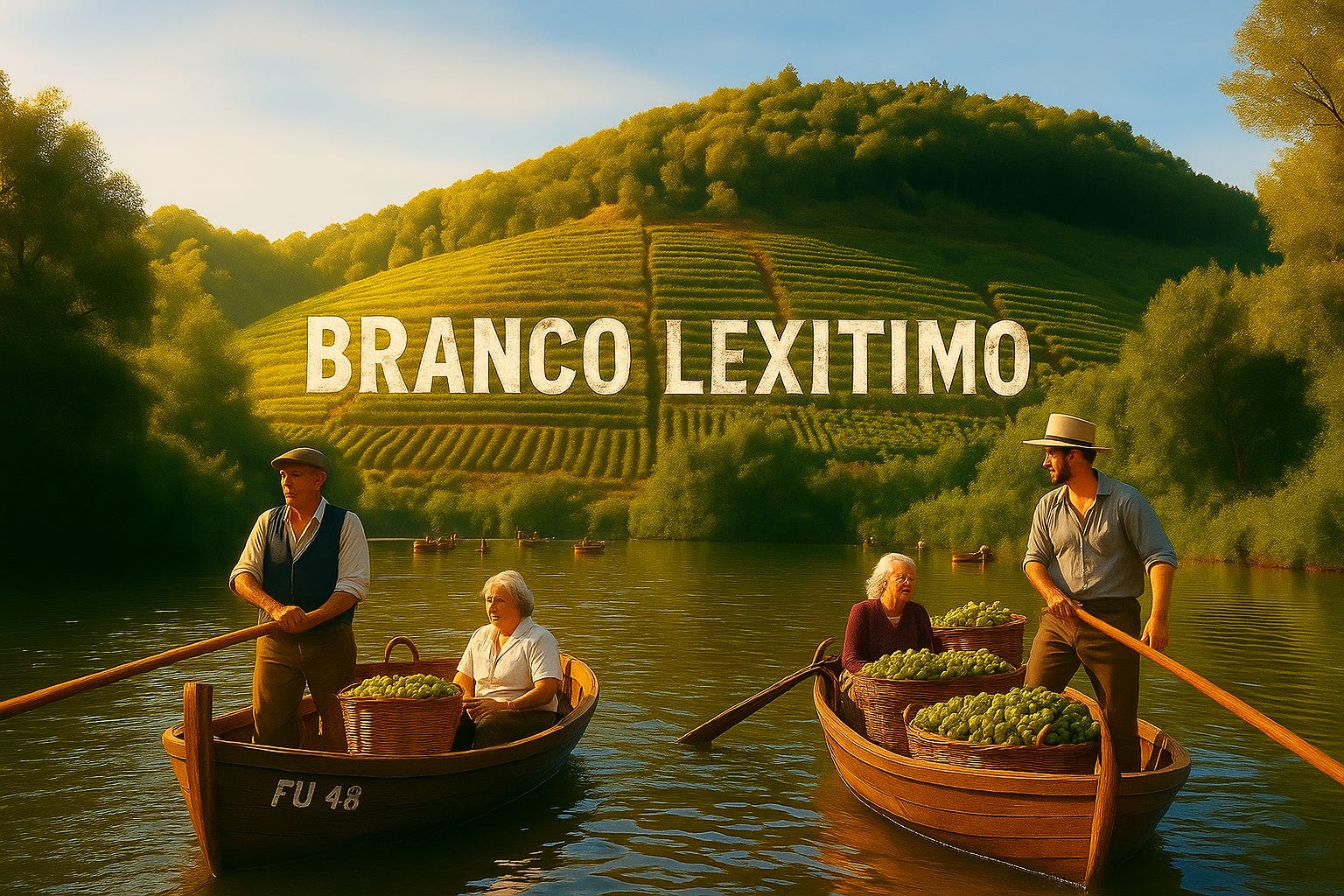
Branco Lexítimo is one of those peregrine varieties, believed to have arrived in this part of Green Spain via the coastal route of the Camino de Santiago. Genetically related to the Traminer family, it retains a high terpenic character, even higher than Albariño. It also gives life to wines with an enormous structure, resulting in an unctuous glyceric mouthfeel and preserving a vertical backbone that makes it a perfect candidate for crafting cuvées that speak truthfully of terroir and have great potential to age. Agronomically, its great adaptability to this coastal conditions it’s relatively easy to be grown organically despite the challenging weather.
Because of its intrinsic nature, which for some is a variety yet to be discovered, it is experiencing a Renaissance. According to data from 2024, the total hectares planted in Galicia sum up to 26, 42ha in Asturias, 30ha in Cantabria, and 90ha in León. It’s a native grape that couldn’t be legally used to make wine until 2011 because it wasn’t officially recognized. Mind blowing, especially when you consider that there are pre-phylloxera vines up to 200 years old in the most coastal vineyards near the beach. This recognition was achieved thanks to the efforts of the people of Betanzos to recover this variety through the Juana de Vega Foundation, as well as the efforts of winegrowers in Asturias, Negueira de Muñiz and Barbanza.
Despite the increasing extension of plantings, it is only in the challenging regions, both coastal and mountainous, where the more interesting cuvées are produced.
Coastal DNA: Betanzos & Barbanza e Iria
The I.X.P. Betanzos is where the variety is most present in Galicia. It has been growing on its riverbanks for centuries, although it was first recorded in 1914 by the agronomist García de los Salmones, as a traditionally planted variety that filled the slopes of the Mendo and Mandeo rivers. Betanzos is one of the coolest producing regions within the Iberian Peninsula, with a very slow ripening season, often rainy and damp, and with the enormous risk of fungal diseases. Soils here are not that idiosyncratic granitic rock so present in the rest of Galicia, instead they have a high content in schist.
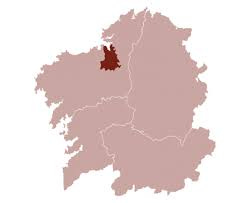
Therefore, a common characteristic of all the wines is their tension, sapidity, and aromatic intensity: depth of stone fruits, candied citrus, rose petals, and, in some vintages, kerosene. After years of bad reputation due to the use of highly productive foreign varieties such as Palomino or Alicante, and even American hybrids, Betanzos is facing a new wave of small producers who are investing all their efforts into making serious cuvées that speak to us of origin using not only Branco Lexítimo in purity, but also co-planting it and blending it with the also indigenous Agudelo (or Chenin Blanc) which grew in this area since centuries.
The way forward was shown by Conexión Mandeo, a group of four friends who put the potential of Branco Lexítimo back on the map. Today, this group has disbanded, but two of its former members are making very good wines. José Beade at Ribeiras de Armea, and Ricardo Rilo at Bodegas Rilo, who is also crafting a late harvest and a traditional method using this variety. Also, very noteworthy is the effort that Luís Sande, from Pagos de Brigante, is making to replant those abandoned terraces on the margins of the Mandeo river, and that of new projects like Adega Os Chaos, the austerity displayed by their Lugar de Balteira is simply top.
* you can read a full report o those projects and their wines clicking here
The Ocean and the I.X.P. Barbanza e Iria go hand in hand, for better or worse. This is what gives it its identity, as this peninsula rises on the northern shore of the Arousa loch, right where the province of A Coruña ends, and reaches as far inland as Santiago. Its surroundings are full of unique and protected enclaves such as dunes and lagoons, small fishing villages that grow looking more towards the sea than the rural areas, and vast beaches of pristine sand lapped by the wild Atlantic. A land of myths and legends, of submerged cities, tragic shipwrecks, Celtic settlements, small waterfalls, iodine fogs, wild horses, and vineyards, few of which still remain active today.
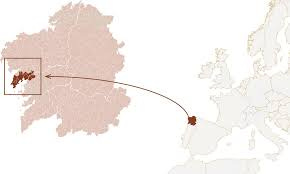
In 2003, local winegrowers began fighting for recognition of Barbanza as a winemaking area, as it was once a historic region where the development of vines was an activity that, while not the main economic driver, was nevertheless significant. Protected by the Sierra del Barbanza, the low-pergola trained vineyards (1.2 m high) dotted the coastal landscape, rarely planted above 150 meters of altitude, sharing the space and landscape with other crops. There are records that in the 30s and 40s, there was a significant concentration of wineries in this area. However, people eventually turned their backs on winemaking because the money was elsewhere. Thus, the abandonment of the vineyards began, favouring a life in the sea.
Today, thanks to projects such as Adega Entre Os Ríos, with José Crusat leading, in Pobra do Caramiñal or Cazapitas in Rianxo, this viticultural heritage is being recovered. Here, Branco Lexítimo is known as Raposo, which, given the nature of its granitic soils and the fact that it has 300 more hours of sunlight than in Betanzos, produces wines that gain in structure but without losing that characteristic katana-like tension. The wines are also subtler, where white flowers, citrus peels, white stone fruits, and iodine notes predominate.
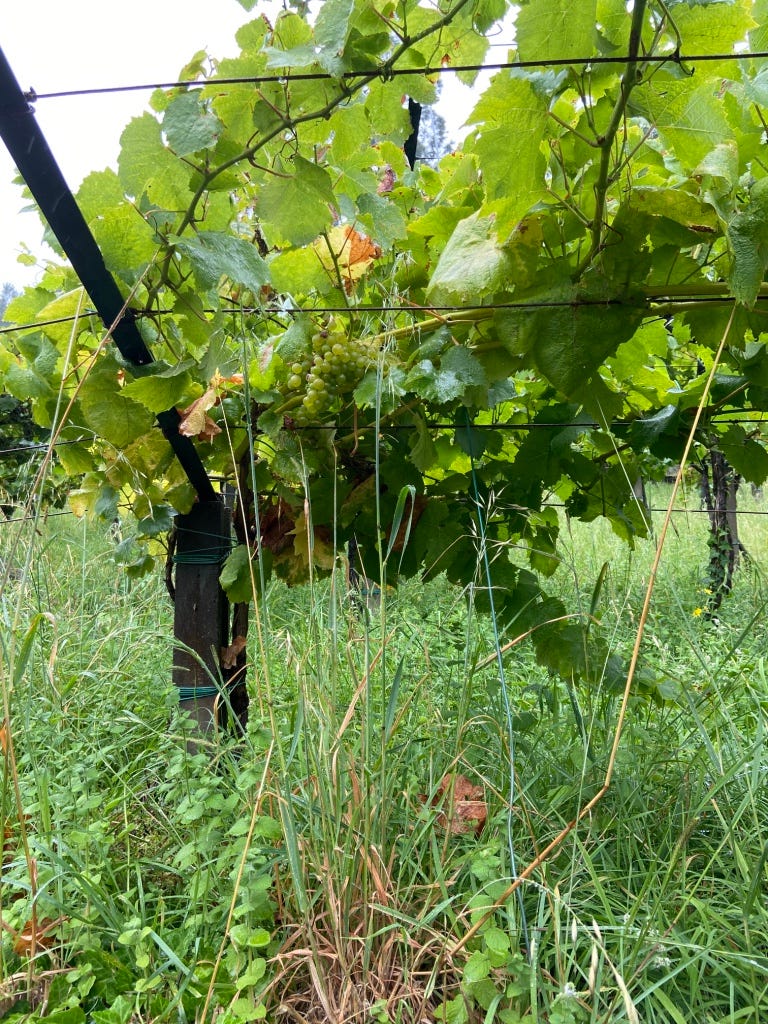
Heroic Viticulture: Negueira de Muñiz & Cangas del Narcea
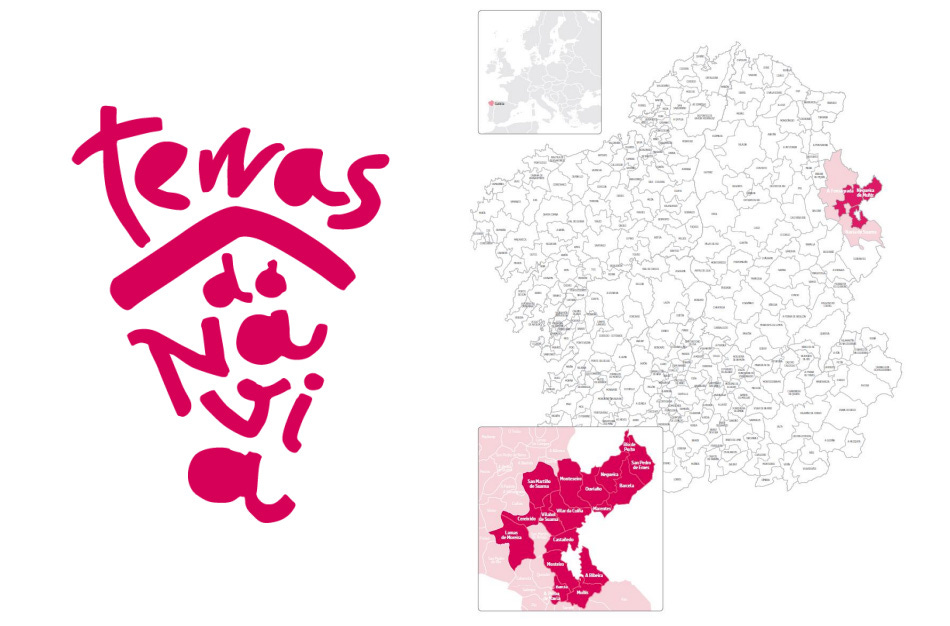
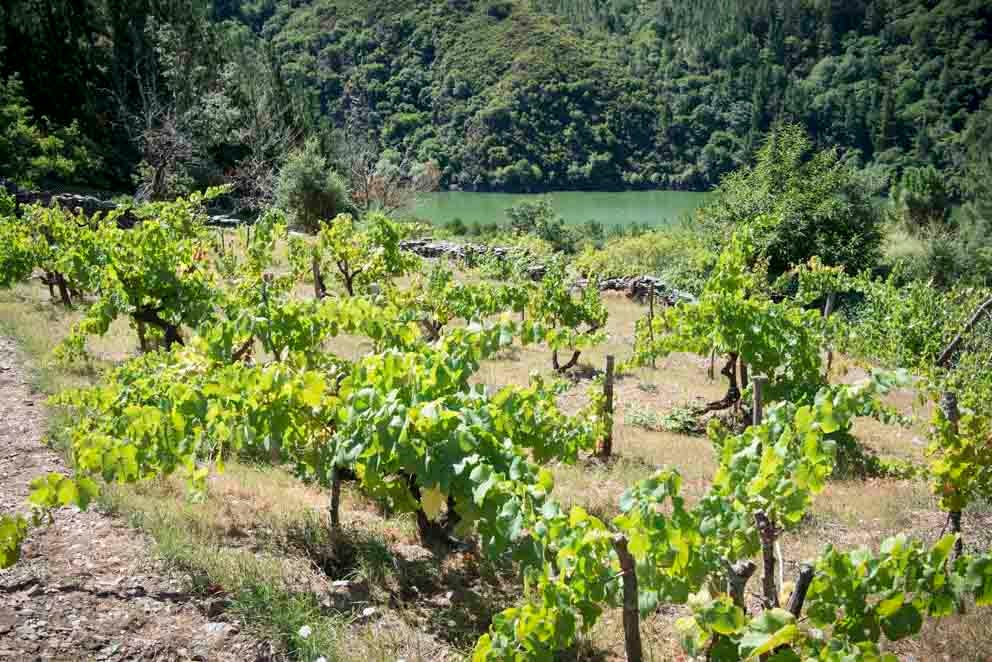
Located in the easternmost part of the province of Lugo, with the Ancares Mountains on the horizon, the I.X.P. Terras do Navia, is a place bathed by the Navia river, where nature blends perfectly with the peaceful lifestyle of its people. Nestled in a valley of steep slopes and protected by high mountains, it has its continental microclimate with Atlantic influences. Soils are fragmented slate and clay.
Here, in Negueira de Muñiz, we find records of winemaking tradition that date from the 1300 to 1700. Local families had vineyards full of trellises of Branca País, which is how Branco Lexitímo is commonly referred to in here. Today, vines are either abandoned or the vinegrowers are too old to take care of them. An abandonment accentuated by the construction of the Grandas de Salime dam in the 50s, which not only divided the municipality in half, but caused a large part of these vineyards to be flooded, thus forcing most of the population to emigrate.
The vinegrowers that remained in the area continued making wine for personal consumption and selling the surplus in Grandas de Salime and other neighboring non-producing villages around. In recent years, initiatives have emerged to revive this area’s winemaking tradition, thus recovering the Branca País amongst other indigenous varietals. One of the pioneers was Manuel Cancio at his winery Adega Panchín. Following in his footsteps is Adega Sidrón.
Negueira is a town bordering the westernmost part of Asturias, hence its viticultural influence is mostly shared with those producers in the neighbouring areas such as Ibias Valley or Cangas de Narcea, within the D.O.P. Cangas. In this part of Spain, we have a truly misty and mountainous landscape, home to pines, chestnut trees, and oaks. This is an area with a clear Atlantic influence, a cold region, which tends to produce acid-driven and mineral wines. This is a fairly new D.O.P., they’ve been around since 2011, but around the Crias monastery, there are records showing that viticulture has been going on for about a thousand years.
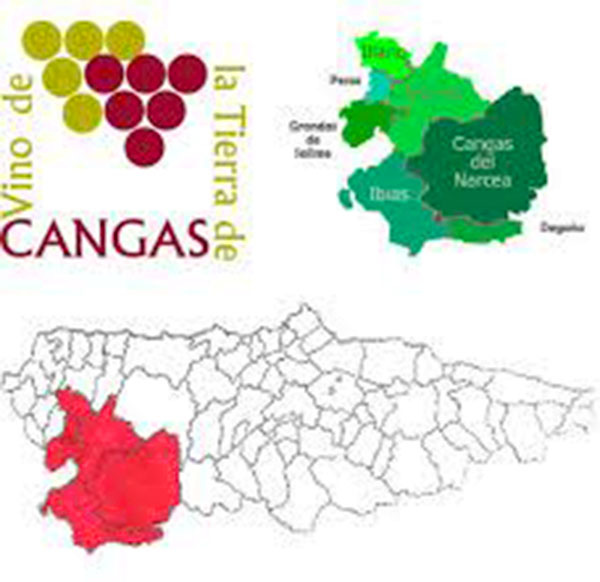
Most families in Cangas had their own little plots of vineyards. As late as the 19th century, Cangas wines gained international recognition, winning several medals in Bordeaux. At that time, bottled wine trade also began, thus exporting to several European and Latin American countries.
In 1890, phylloxera wiped out the vast majority of the region’s vineyards. The current ones were planted after that plague and are very old vines that have only been replanted with younger vines in exceptional cases. Already in the 20th century, the area’s economy was completely transformed with the arrival of coal mining, which required a large amount of labor with more advantageous wages than those paid working in the vineyards. As a result, vinegrowing suffered, being relegated just to personal consumption. This led to the purchase of grapes from outside Asturias, mainly from León, in order to elaborate wines for personal consumption. Thus, the wine industry of Cangas was almost ruined.
It is today when we witness a recovery. Here, Branco Lexítimo is known as Albarín, and the best examples come from the vertiginous vineyards in Ibias or Cangas, at altitudes of over 500m and with slopes of over 30%, pure breathtaking heroic viticulture. Projects like Bodegas Siluvio show the way forward.
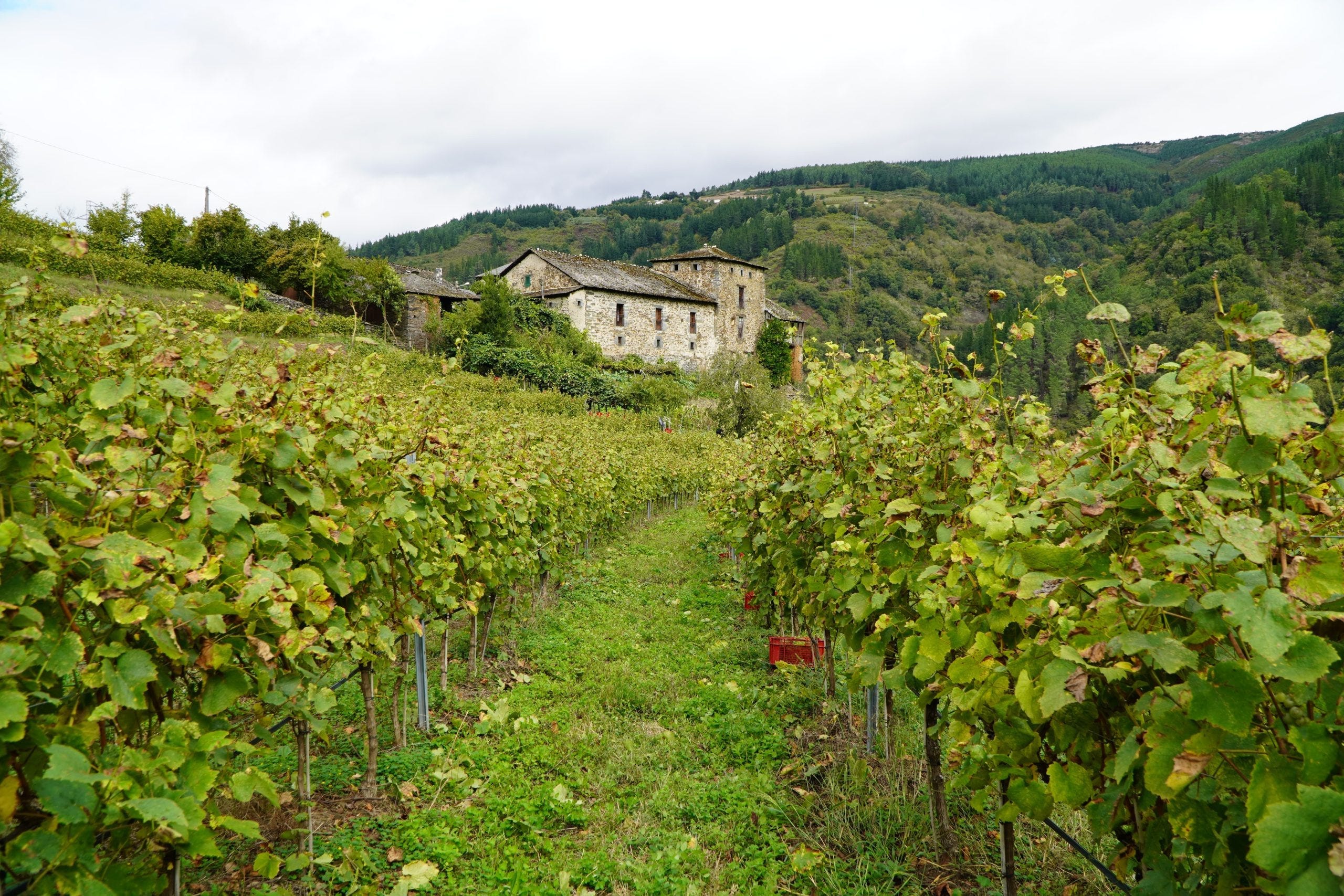
I’ve got to recognize that both are still areas that I’m dying to explore in deep because I only tasted a couple of wines from there. For what I tasted, both in Negueira and in Cangas, the Branco Lexítimo developed more ripe varietal nuances, gaining more muscle, and softening up its acid backbone (compared to Betanzos and Barbanza) without losing that crystalline purity; enjoying that immediatism with which they reward you in the glass. Thus, this is a section that I’ll update as soon as I visit the regions and taste more references, but in the meantime I just wanted to put in value these two territories.
🍷