


This Formerly Illegal Cult Wine Is Taking Over the United States

WINE
THE WINE ENTHUSIAST
BY SARAH STRONG7 MIN READ
When you think of foods you have to sneak into the U.S., you generally think of Italian salumi, French cheese and Japanese citrus. But until January of this year, Vin Jaune, a traditional wine from the Jura region of France, fell into the category—not because of its ingredients, processing method or parasitic potential, but simply because of the size of the bottle.
It may sound like unnecessary red tape, but the Department of the Treasury Alcohol and Tobacco Tax and Trade Bureau (TTB) regulates the size of vessels in which alcohol can be imported, bottled or sold in the United States.
The punchy “yellow wine” (direct translation) is bottled in a distinctly squat container called a clavelin. These portly 620 ml containers didn’t meet long-established rules, which specified wine could only be sold in the standard 750 ml, 500 ml and 375 ml sizes.
But, after more than half of a decade of petitioning the TTB to expand the standard fill guidelines for wine and spirits, these irregularly shaped and sized bottles were made legal as one of the 13 new fill levels the agency approved in January 2025.
This has been welcome news for American fans of Vin Jaune’s nutty, salty, oxidative flavors. Restaurants are especially excited for the increased availability of the golden-hued wine, which is already well on its way to becoming a staple.
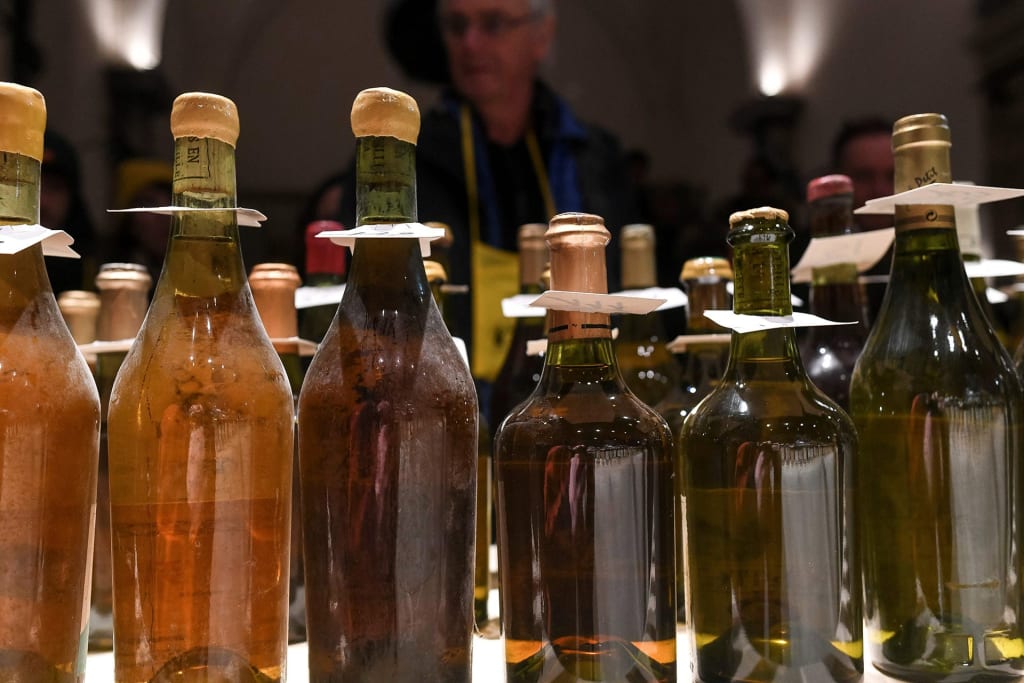
Adam Friedberg, owner of AP Wine Imports, is bringing in a 60-bottle Vin Jaune allocation from his Jura partner Domaine Philippe Vandelle. Though he waited until the law changed to import clavelins, wine directors and retailers have been asking him about it for years.
“I did see the most famous producers on wine lists in the U.S. from time to time,” he says, “and I would always wonder how they got it here.”
Wine House in Los Angeles has been selling Vin Jaune for 45 of their 50 years in business in a variety of sizes, including 375 ml and 500 ml bottles, in addition to the standard 620 ml clavelin. The retailer works directly with producers but also offers consignment. So, it acquires bottles brought over through private parties, which accounts for some of the irregular-sized offerings they’ve carried over the years, says buyer Maria Garcia.
Wine House has encountered situations when the Vin Jaunes they wanted to stock were unavailable. Their long tenure in the field suggests many interested parties flouted or were simply unaware of the former law barring clavelins.
The Veil of Vin Jaune
Legend has it, the 620 ml contained in the now-legal clavelin is the quantity of wine per liter that remains after its requisite 60-month-minimum aging period. It’s unclear whether that’s wholly accurate or not. But Vin Jaune is aged in oak casks that are not topped up.
Similar to how Sherry is made (minus the fortification), this technique invites oxygen into the barrel, so that thin film of yeast can form on top, locally referred to as “voile” (which translates to “veil”). That yeast is responsible for its rich yellow color and dry texture.
Ellis Srubas-Giammanco, wine director for Penny in New York City, describes the structure as “held up by piercing, saline acidity and the warming depth of alcohol” with a dry, chalky texture. It differs from most full-bodied white wines, due to that “voile.”
Vin Jaune is made exclusively with late-harvest Savagnin grapes. The pale-skinned white variety, indigenous to Jura, is known for its bright floral and citrus aromas. When oxidized into Vin Jaune, these flavors can span from apples and almonds to spicy and more pronounced nutty flavors.

“It’s a very complex wine style,” says Srubas-Giammanco. It balances “bracing, chilly green notes like granny smith apple, fennel and seaweed with more golden ones like hazelnut, cumin and yellow raisin.”
Friedberg likens it to his first sips of beer: “kind of bitter and unpleasant, but you really do grow a taste for it,” he says.
Much of the aroma profile comes down to how and where it’s aged. The winemakers in the regional appellations of Arbois, Côtes du Jura, L’Étoile and Château-Chalon reject the use of modern technology—instead opting to age their barrels with no sulfur in non-temperature-controlled spaces to achieve the desired result.
“We will choose cold cellars for aging to bring notes of apples and almonds to the wine,” says Mélanie Dugois, winemaker of Domaine Dugois. Conversely, “attics will be chosen to obtain yellow wines rich in spicy notes such as curry or even more pronounced nutty flavors.”
An assemblage is created to produce a wine that combines the nuances of both techniques. Winemakers must wait a full six years and three months after the harvest to bottle.
A Cult Favorite
All of this is to say, Vin Jaune is wholly unique. Its one-of-a-kind flavor and ability to develop over time has helped it earn a cult following among industry pros.
Tabula Rasa in Los Angeles has been serving various Vin Jaune wines for years, all of which were obtained directly from distributors. Most recently, operating partner Nicole Dougherty offered Fumey-Chatelain Arbois Vin Jaune by the glass, bottle and for retail in its O.G. clavelin packaging.
Other spots, like at Restaurant R’evolution in New Orleans and La Compagnie in New York City, mostly offer Vin Jaune by the bottle.
Since opening Penny in New York City last year, Srubas-Giammanco has been sourcing clavelins directly from Jura producers such as Stéphane Tissot, Marnes Blanches, Jean Bourdy and Jacques Puffeney in limited quantities. The tight availability of what he calls a “high octane” and “unexpected” wine is not just due to the stringent legal restrictions. Inconsistent crop yields and surging demand have made it hard to obtain the small production bottlings from the equally small region.
According to the Interprofessional Committee of Vin Jaune, Jura produced 9.8 million bottles total in the 2023-2024 season, accounting for .2% of all French wine. Only 4%, or just over 360,000 bottles, of that was Vin Jaune. Most of these Jurassic wines stay in France with the rest split between the EU and other countries.
Vin Jaune on the Menu
Despite the difficulties in getting it, Vin Jaune has been appearing on a growing roster of wine lists. It’s showing up on food menus, too.
Chicken in Vin Jaune cream sauce with morel mushrooms has long been a Jura staple.
Penny offers an homage to the regional mainstay with scallops in place of chicken and beurre monte, a classic French butter sauce, spiked with the wine at the end for more pronounced nutty and curry flavors.
You’ll also find Vin Jaune in less traditional dishes at top restaurants across the country.
In Philadelphia, French-American bistro Laurel serves a dish of cod with cherries, hazelnuts and Vin Jaune. The wine is cooked down then mounted with butter and finished with lemon and heavy cream to form a sauce—a common preparation but with a slightly more modern flavor profile.

Vin Jaune sauce also tops the truffle-glazed chicken with smoked bacon on the lounge menu at Napa Valley’s Press.
It is even showing up in desserts. At Bridges in New York City, it’s churned into a classic vanilla gelato base and served with seasonal fruit.
These creative dishes are likely just the beginning. Now that Vin Jaune is officially legal, industry pros, like Srubas-Giammanco and Friedberg, anticipate seeing more of it on restaurant menus and beverage lists.
Due to the history of quality for price and unique drinkability, “the wines of the Jura were always set to succeed in the U.S. marketplace,” Friedberg says.