


The Science of Vanilla Flavor in Whiskey
THE WINE ENTHUSIAST
Nearly every aspect of the whiskey-making process impacts the level of vanilla flavor, from the choice of wood to the climatic conditions—and it’s up to the distiller to successfully dial it in
Across cultures, ages, and cuisines, when it comes to our favorite flavor, research points, time and again, to vanilla. It’s universally recognizable—and universally found in whiskey.
Though it’s impossible to make a whiskey with absolutely no vanilla notes—due to the barrel-aging requirements—there are certainly ways for skilled distillers and blenders to maximize or minimize the impact of one of whiskey’s most identifiable flavors. Nearly every step of the whiskey-making process, from selecting a grainbill to final blending, will affect vanilla levels in the final spirit. For distillers, being aware of the flavor chemistry behind each decision is essential for taking a whiskey from a one-note confectionary bomb to a complex spirit with evolving layers of flavor. SevenFifty Daily spoke to distillers, blenders, and whiskey makers about the science behind honing vanilla notes in whiskey and their particular approach.
Where Does Vanilla Flavor Come From in Whiskey?
The phenol vanillin is the main flavor-active compound in the pods and seeds of the vanilla orchid (Vanilla planifolia), the plant that we associate with vanilla flavor. The orchid has myriad other compounds notably guaiacol (smoky), aldehydes (woody/nutty), and phenethyl alcohols (floral) that create a complex depth to natural vanilla. Yet, when it comes to whiskey, vanilla flavor comes almost exclusively from alcohol extracting pure vanillin, which naturally occurs in the lignin of soft woods, such as oak.
Since vanillin is a phenol, a small amount of the compound could conceivably come from fermentation. But even if that fermentation-produced vanillin made it through distillation (unlikely) there wouldn’t be a high enough concentration of vanillin molecules for humans to perceive it.
Just because vanilla in whiskey comes from wood, doesn’t mean the barrel is the only consideration when it comes to how vanilla-forward the final whiskey tastes; ingredients, temperature, the aging environment—and age for that matter—plus other conditions come together to build the vanilla puzzle.
The Barrel Factor
Every aspect of the barrel from the variety of wood, to how that wood is toasted, charred, and treated will impact the amount of vanillin it contributes to the whiskey. Wood lignin, where vanillin is found, is the component of wood that acts like a glue, holding together its structural elements. Each type of wood has a different structure and different sized pores, which has a major impact on flavor extraction. The wider the natural pores in the wood are, the easier it is for alcohol to absorb flavor components, including vanillin, from it.
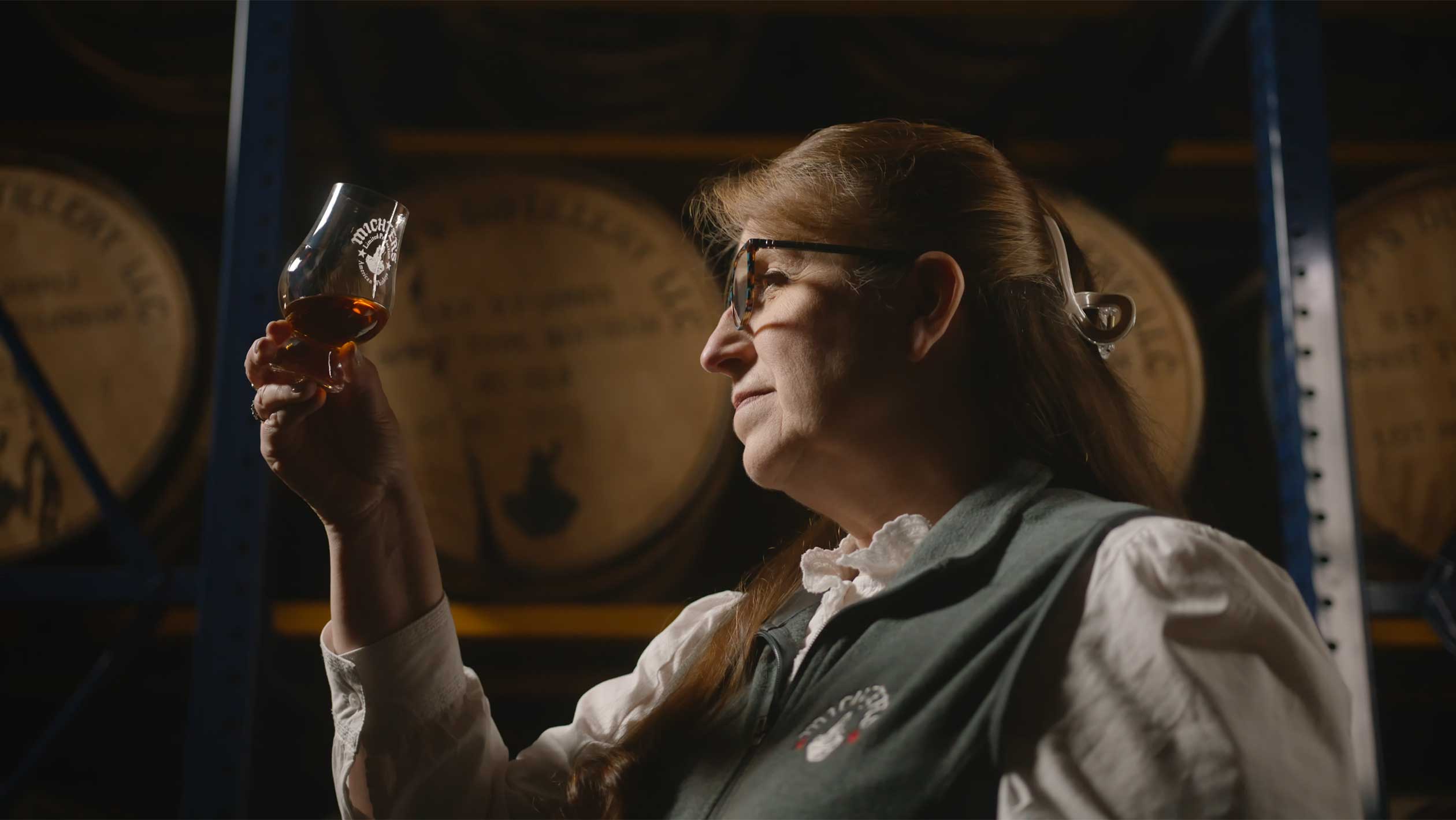
American white oak is the popular choice for bourbon and Kentucky distillers because of its porous structure and “the high degree of extractable compounds … one of those being vanillin,” says Andrea Wilson, the master of maturation and chief operating officer at Michter’s Distillery in Louisville.
The use of the barrel also contributes to vanilla levels. Upon first use, the wood will have the maximum amount of vanilla ready for absorption; with each consecutive use of the barrel, vanillin levels are reduced. In used barrels, the whiskey has to stay in contact with the lignin for a longer duration to extract the same amount of vanilla.
By law, bourbon must be made in first-use barrels, and often those barrels are the vanillin-rich American white oak. “That’s why the vanilla is the most noticeable note in bourbon, but it doesn’t have to be,” says Wilson, noting that using a different kind of oak, with a tighter grain, like French oak will result in less vanillin extraction.

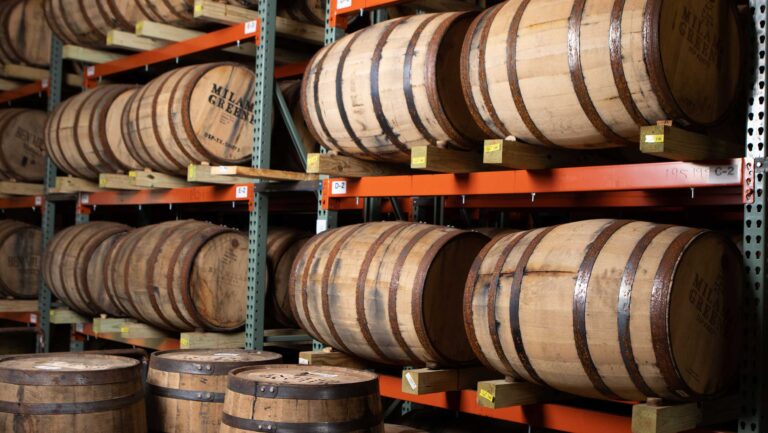
But, as Heather Greene, the master blender of Milam & Greene in Texas, explains, the wood’s structure is influenced by environmental temperature. Cool temperatures make the pores contract, while warmth causes the wood to expand. In Texas, where her distillery is based, seasons range from extremely hot to icy cold.
“Quicker development of the vanilla notes comes from the shifting temperatures opening the pores of the wood and then closing them; getting the whiskey in and out of the wood extracts [vanillin],” says Greene. Whiskey in a barrel undergoing the extreme environmental changes in Texas will pick up more vanillin, faster than one in an area with consistent weather conditions like Scotland or Kentucky.
Beyond climate variations between cities, states, or countries, this opening and closing of wood pores can vary within a single warehouse. Dan Calloway, the master blender at Bardstown Bourbon Company, has identified 72 individual micro climates within his barrel houses. He says some barrels are exposed to direct sunlight—these undergo more temperature swings and develop more vanilla flavor (along with other flavors like coconut or caramel).
Char for a Little, Toast for the Most
Pore size and openness of the wood helps whiskey extract more vanilla, but there are more ways distillers can control the amount of extractable vanillin in the wood, mainly through toasting it, charring it, or both.
According to Calloway, the knowledge around flavor development from charring has shifted in the last decade. He says 10 or so years ago, it was widely believed that a more intense char (a char level four) gave whiskey access to a wider, deeper area of wood lignin and therefore more flavor. However, working with the Independent Stave Company and their research team, he learned that a lower level char (a char level one) yields just as much access to the wood.

Charing is a hot and fast process where the interior of the barrel is literally burned in a number of seconds. Toasting is a slower, gentler process where wood is warmed to encourage the development of certain compounds. Blenders like Calloway, Greene, and Wilson use the toasting process to build their desired flavors over several hours of heating.
If Calloway is going for “heavy vanilla from a barrel,” he will always select a “medium toast with a char [level] one.” Medium toasting develops soft flavors like vanilla, caramel, coconut, and candy floss. High toast delves into darker robust notes like cocoa, smoke, and coffee.
Hide the Vanilla
While it is virtually impossible to have a whiskey with no vanilla, it is very possible to have a whiskey that has no noticeable vanilla flavor. One of the best ways to tamp down on the perception of this vanilla is by introducing competing flavors to overpower it.
“A very boisterous, heavily peated whiskey, your oily smoke iodine and whatever else, might dominate, and really subtract from the vanilla,” says Samuel Travers, the lead whiskymaker at Compass Box in London. Even flavors less intense than smoke—the spice and dill quality of rye grain, the gripping bitterness of wood tannin, and the warming burn of alcohol—will compete with vanilla.

Greene says these competing flavors can come from the grain bill. Corn is a milder base that will elevate vanilla’s sweet and creamy perception. While the herbal and spice notes of a high rye whiskey stand in direct opposition to vanilla.
Just like the base grains, finishing barrels provide flavors to balance or mask vanilla flavors. Calloway and his team at Bardstown Bourbon Company use a wide selection of unique finishing barrels. Finishing flavors can come from an obscure wood variety like their limited-release Hokkaido Mizunara, finished for 28 months in rare, porous Japanese Mizunara oak barrels sourced from Hokkaido, which has notes of sandalwood and blueberry to balance the vanilla. Or it can be the spirit that was previously in the barrel providing the novel taste, like their Maison Ferrand Cognac finish, which contributed typical Cognac notes of raisin, baked apple, and pecan to hold vanilla in harmony.
Vanilla Becomes More Complex Over Time
Finally, vanilla flavor can change during the aging process due to several chemical reactions that distillers must monitor carefully.
When Travers set out to make the latest release from Compass Box, Brûlée Royale, he knew he wanted a complex vanilla accent to play up the confectionary nature of the whiskey. To capture this range of vanilla flavors he blended barrels of different ages. “Over time, vanillin oxidizes into vanillic acid, which is a deeper, creamier kind of aroma,” he says. The vanillic acid contributes a steamed milk quality to the final flavor of the whiskey, while pure vanillin extraction is that confectionery note we come to expect of vanilla.
It can take several years for this oxidation reaction to shift the flavor of the whole barrel. But once enough vanillic acid is present, it can undergo a further reaction called esterification. Here, the vanillic acid reacts with an alcohol to form an ester, in this case vanillin acetate, which again has a creamy dairy aroma mixed with the vanilla note you’d expect.
By monitoring this vanilla development in barrels that were 10 or more years old, Travers was able to blend the perfect amount of creamy aged vanilla with the younger fresher notes of vanillin to build the creme brûlée profile he was looking for.
Just as Travers built a specific vanilla profile to echo dessert, distillers and blenders can use all the tools at their disposal to design the ideal amount of vanilla in whiskey.