


The Science of Blending Wine
Blending wine is about much more than combining different grape varieties—it can impact alcohol, color, flavor, and more. Here, researchers and winemakers explain the science behind this important winemaking process
“Winemakers hesitate to talk about blending because they worry it might make their products seem too manufactured,” says Laure Mene-Castillou, the winemaker at the leading southwest France cooperative Plaimont. “But the reality is that blending is absolutely essential to making good wine. Everyone relies on it at some stage.”
Blending is indeed one of winemaking’s most underrated processes. Often perceived as the mere combination of different grape varieties, it in fact plays a key role in nearly every wine—from everyday supermarket bottles to premium single-vineyard releases. Blending can involve everything from components of the same batch matured in separate vessels to liquids of varying color and alcohol content.
The blending process serves numerous purposes. It may help combine different components to reach the desired production volume or to make the best use of all available raw materials in the winery. But it is also used to achieve balance and consistency across batches or individual bottles. While empirical trials and organoleptic testing are essential for predicting how a wine will ultimately be perceived after blending, science plays a key supporting role in guiding these decisions with greater precision.
Don’t miss the latest drinks industry news and insights. Sign up for our award-winning newsletters and get insider intel, resources, and trends delivered to your inbox every week.→
Blending to Enhance Aromatic Quality
When different elements interact with each other, they create new, distinctive flavors and aromatic profiles in ways that might be difficult to predict without the insight and support of science. A recent study explored how blending an unaged base wine with components matured in three types of barrels affects the drinkers’ sensory experience.
The researchers created blends by combining the unoaked base wine with each of the three oaked samples. Perhaps expectedly, they found that higher proportions of oaked wine tended to suppress the perception of fruity aromas. A more surprising find, however, was how the type of oak influenced which specific aromas remained perceptible, too. Wines aged with highly toasted American oak appeared the least fruity overall, while samples matured in highly toasted French oak helped preserve some strawberry and apple notes. Most intriguing was the medium toasted French oak sample, which struck a balance between fruit and wood, and even produced a completely new blackcurrant scent not present in any of the original components.
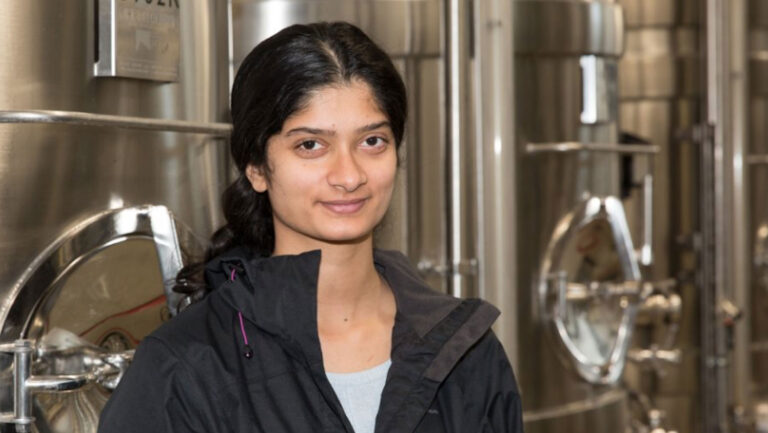
The relationship between base wines and their blends is just as complex when oak isn’t involved. Deepika Koushik, the head winemaker at Britain’s leading enology school, Plumpton College, argues that blending is essential for managing the high levels of thiols in Bacchus, one of England’s flagship white varieties. “Bacchus is rich in thiols, which on their own can produce unpleasant green or even sweaty aromas,” she says. “But when diluted with at least 20 percent of a more neutral variety, we perceive those aromas differently and they become appealing.”
Similarly, one Oregon-based study found that sensory perceptions shift significantly depending on how thiols interact specifically with esters, and showed that by experimenting with different combinations of these two components, winemakers can craft wines with pronounced tropical fruit notes.
The relationship between blending and the pursuit of desirable aromatic profiles is especially relevant in the production of lower-alcohol wine, which—despite recent quality improvements—still faces resistance due to its perceived lack of sensory appeal. An Australian research team tackled the challenge by experimenting with intravarietal blends of Verdelho and Petit Verdot, combining base wines from underripe grapes with equal parts from riper fruit to create samples of varying ABV levels. The Petit Verdot blends showed no significant sensory differences between the lower-alcohol wine and the one made exclusively from riper fruit. This indicates that, for certain grape varieties, blends of liquids from grapes of varying degrees of maturity can be a highly effective strategy for producing lower-ABV monovarietal wines without compromising on quality.
The Importance of Timing
If different base wines can have a marked impact on the character of the finished wine, so too can the specific moment at which they are blended together. Some prefer to blend only once just before bottling, others may choose to blend at different points in the winemaking process. This type of staged approach can offer greater control over the final profile.
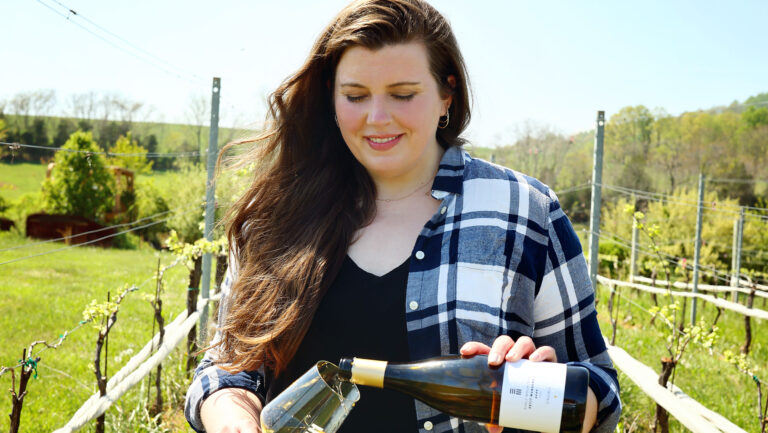
“It totally depends on the wine,” explains Maya Hood White, the winemaker at Virginia’s Early Mountain Vineyards. “We blend at multiple different time points depending on the wine.” For her cold-fermented Sauvignon Blanc–Petit Manseng expression, for instance, she blends quite early, running several trials to see which combination works best. With her red wines, however—which rely on ambient fermentation and typically undergo a slower primary and malolactic fermentation—her approach is more gradual. “I’ll start doing some test blends while they’re going through malolactic conversion,” she says. “That gives me a sense of what we have to work with. Then, around March or April, I’ll start blending again. Right after malo, wines can feel a bit muted; they don’t have that vibrancy because they’ve just finished fermentation. That’s why I wait a couple of months to do the final tests as by then, they start coming alive again.”
Timing isn’t just important for shaping a wine’s final aroma, it also plays a crucial role in other aspects, including color intensity and stability. One study examined the effects of co-fermentation versus post-malolactic fermentation (MLF) blending of Syrah with various Rhône white grape varieties and found that the timing of blending significantly influences both the chemical and sensory characteristics of the resulting liquids. It showed that post-MLF blending is the most effective strategy when it comes to creating greater color intensity and stability in the final wines.
A similar outcome emerges when examining intervarietal blends of Graciano—a minor Spanish variety prized for its deep color—and Tempranillo. Multiple studies have investigated how the two grapes interact, particularly in terms of appearance, and consistently confirmed that Graciano contributes significantly to color intensity in the blend. Yet, these combinations seem to display less color stability over time compared to wines made from Graciano alone, suggesting that they may be better suited for wines intended for earlier consumption. For wines intended for longer bottle ageing, blending the grapes before fermentation once again proves beneficial, with this approach improving the color stability of the finished wine and resulting in a fresher, more vibrant blue-tinged hue.
This research exemplifies how science can be a powerful creative tool for winemakers, showing that even small, well-informed adjustments to the blending process can significantly enhance wine quality. “You wouldn’t ask a chef to just put raw ingredients on your plate,” says Plaimont’s Mene-Castillou. “You must understand how they work together—only then can you create something exceptional.”