


The Science of Grape Pressing
By using more sophisticated technology and focusing on technique, winemakers can use grape presses to craft more precise wines of different quality levels and styles
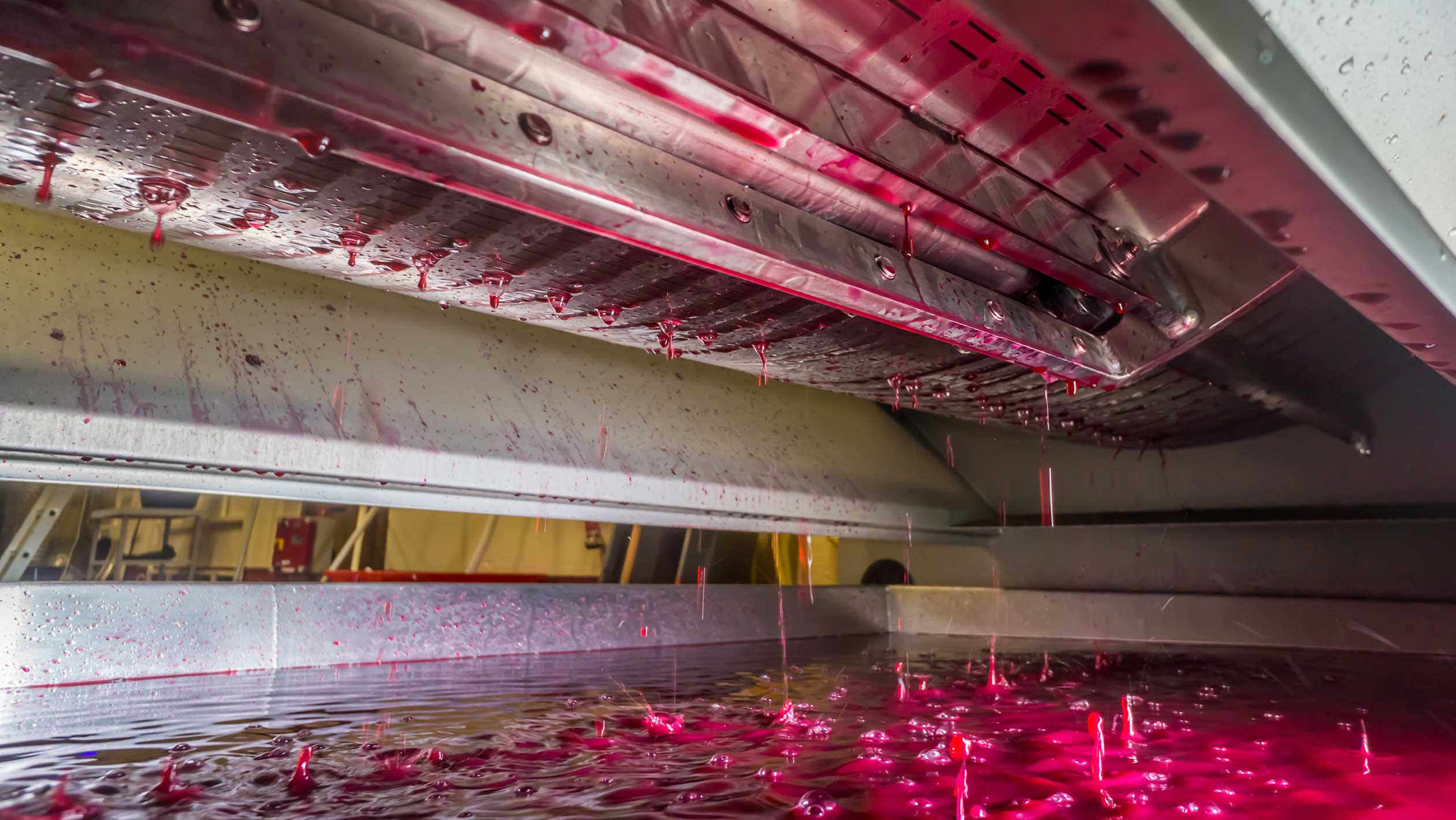
The grape press, especially in its antique form—with wooden screws and levers the size of trees—is one of the iconic tools of a winery. It’s the sort of thing any movie director includes when they want to tell the audience that wine is being made.
Today’s wine presses may lack the romance of their rustic forebears, but they are far more sophisticated. When used strategically, they provide winemakers with far more control over the winemaking process. And as the machinery becomes more refined, winemakers are carefully studying and exploiting these tools to craft ever more precise wines.
SevenFifty Daily spoke to winemakers and dug into the research to understand the various types of presses in use today, the impact they have on the juice and resulting wine, and how exactly winemakers can make the most out of the pressing process to improve the quality of their wines.
Don’t miss the latest drinks industry news and insights. Sign up for our award-winning newsletters and get insider intel, resources, and trends delivered to your inbox every week.→
The Grape Pressing Tools
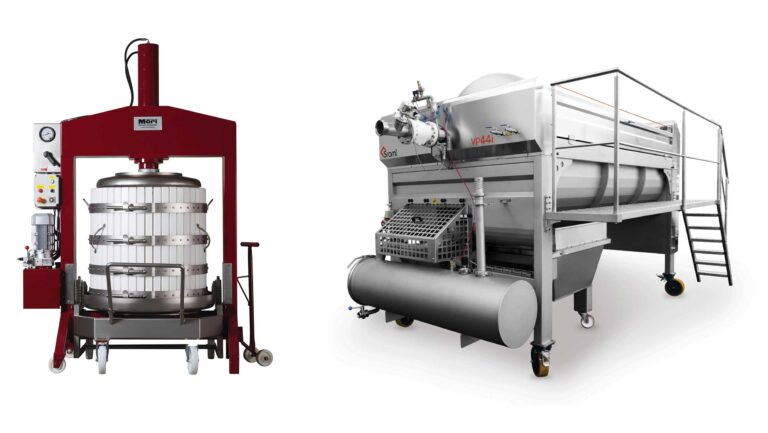
Modern wine presses come in several forms. While some high-volume producers making bulk wine will use a continuous press, which relies on a corkscrew to move grapes or must through a continual pressing process, most modern presses work in batches. That’s because continuous pressing puts greater stress on the solid parts of the grape, yielding musts that are higher in phenols and more difficult to clarify.
The pneumatic press is the most common; one estimate suggests it makes up 55 percent of the presses in use in wineries worldwide. “The pneumatic membrane press is newer technology,” says Michael Caviness, the general manager at TCW Equipment, which has been importing presses and other winemaking equipment since the 1960s. “It’s typically a horizontal drum, wherein there’s a bladder on one side of the drum, and the bladder gets inflated by compressed air and pushes the grapes against the side of the drum. It’ll typically follow a routine where it presses, rests, turns to break up the grapes, and then presses again.”
“The pneumatic press is easier to work with,” adds Vincent Decup, the technical director at Château Montrose in Bordeaux’s Saint-Estèphe. “It’s easier to fill, and easier to empty.” It’s also more enclosed than a basket press, making it easier to control temperature and air contact.
The vertical or basket press is still popular as well, and most resemble pre-industrial presses in that they rely on a piston to push a plate down on the grapes or must, and wine or juice flows out through slats on the side of the press. The juice passes through more of the pomace in basket presses, filtering out the lees while also extracting additional aromatic compounds. Even though a basket press can apply much more pressure, Caviness says extraction is gentler than for pneumatic presses.
“As it gets pressed down, a structure will form in the grapes that prevents the plate from going any further, and there may be pockets of uncompressed grapes,” says Caviness. “That’s not so true in a pneumatic membrane press because those pockets tend to get broken up and exposed when it goes through one of its turning cycles.”
Free Run Is Not Enough
The juice, in the case of white wine production, or wine, for reds, that emerges from the press is typically described in fractions based on when in the pressing process it’s extracted. Free-run juice, which emerges without any pressure beyond the weight of the grapes themselves, is first. From there, a winemaker can divide the pressed juice or must into as many fractions as they desire.
Free-run juice is typically more prized than pressed juice, though research with Pinot Biancoconducted by Konrad Pixner, Ph.D, a researcher at the Laimburg Research Centre for Agriculture and Forestry in Alto Adige, Italy, suggests that wines made solely from free-run juice were “too light, not as complex, and not as typical,” as those that incorporated juice from the pressing process.
That’s true for red wines as well; a typical red Bordeaux includes a significant amount of press wine. At Château Montrose, for example, Decup says 12 percent of the finished grand vin and as much as 14 percent of the second label wine is typically press wine. “When you add press wine, you structure the wine, you add the backbone of the wine, you increase the aging potential as wine, so it is very strategic for us to work on it,” he adds.
How Pressing Impacts Grape Juice and Wine
The structure of the grape dictates which juice is released first and which later in the pressing, and leads to differences in the quality and character of the juice or wine as the process continues. “Your cuvée, the first fraction, comes from a group of cells not too close to the skin and not too close to the pips,” says Paul Gerber, the managing director of Colmant Cap Classique in Franschhoek, South Africa. “The cuvée is typically very elegant and has nice acidity. With the première taille [the second fraction], you’re slowly starting to take juice from closer towards the skin, so you might have the early onset of a little bit of phenols.”
The fruit profile can also change as you move towards the skins, shifting from citrus to more stone fruit aromas. As you press harder and longer, acidity drops and the pH rises, tannins may be extracted, and the resulting wine will have more texture and body. For a white wine like traditional-method sparkling, those phenols and anthocyanins can lead to brittle, harsher bubbles. Therefore, being able to control the pressure and level of extraction is key.
Red wine, pressed after fermentation and maceration, can be more variable. Château Montrose conducted a study on press wine during the 2016, 2017, and 2018 vintages, and are following up with additional research. Initial conclusions found the first two-thirds of the pressed wine to be of good quality, but the last third was at risk of being bitter or astringent.
In part, they attributed this to the higher pressure being used (greater than 2 bars), but equally at fault was the mechanics of “crumbling” the pomace, or separating the compacted grapes from each other between each pressing. According to Caviness, this is why some producers of premium red wine favor the basket press. Grape skins are fragile after fermentation, and these grape solids can be more easily damaged during the crumbling process so they release negative characteristics. Since the pomace isn’t moved about when put through a basket press, there’s less chance of damage.
“You can have a very clear and weak press wine,” Decup says, “or other times it’s too concentrated, with harsh, aggressive tannins.” They’ve made it a usual practice to rake off and discard the top five to 10 centimeters of the pomace before moving the pomace into the press. “It’s the most acidic part of the [pomace],” Decup says. “You have to separate it, because it gives you harsh tannins, volatile acidity; it’s a weak press wine and not good at all.”

Other Variables to Consider
Beyond the process itself, it’s important to consider what exactly is being pressed. A study in Italy focused on the differences between pressing whole clusters compared to pressing destemmed and crushed grapes in the production of rosé wines. Destemmed grapes were found to yield juice with higher pHs. Both methods, whole cluster and destemmed, yielded juice with the same color intensity at low pressures, but as the pressure increased, the color intensity from the destemmed and crushed grapes also grew, while juice from the whole cluster sample didn’t change.
The intensity of floral and fruit aromas was not only different between the two samples, but each reacted to higher pressure differently; for example, tasters found wines from destemmed grapes extracted at higher pressures to be fruitier than those made from whole clusters at the same pressure. The report concluded that wineries could readily use the pressing process to create the desired style of rosé in lieu of chemical additives.
The temperature of the pressed grapes is also a factor, and one becoming more important as temperatures during harvest continue to rise in response to climate change. “One of the things that I was asked about the most last year while visiting Champagne was how we manage berry temperature in the press houses,” says Gerber. At Colmant, they cool the grapes to below three degrees Celsius, which greatly reduces tannin and anthocyanin extraction to yield juice ideal for bubble production.
While often derided as inferior to free-run wine and juice, press wine remains a key tool for winemakers. It also makes up too much of a typical winery’s production to disregard. “We estimate press wine represents something between 17 to 22 percent of the world’s wine production each year,” Decup says. “In economic terms, it’s very, very important.”